Designing with Romax Italic Font: A Practical Guide to Elegant Implementation
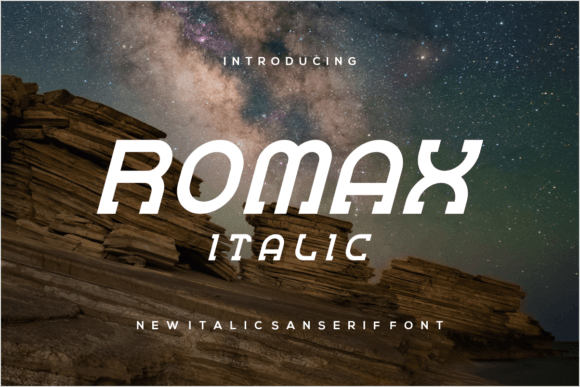
In the lifecycle of any creative project, typography is rarely the starting point, yet it is often the defining factor of the final output. Whether you are drafting a brand identity, designing a digital interface, or laying out print materials, the typeface you select dictates the emotional resonance of the work. Romax Italic Font occupies a specific, high-value niche in this process. It is a sweet and elegant slab serif typeface that retains a classy calligraphic influence while feeling contemporary and fresh. Understanding how to integrate this font into your workflow requires more than just an appreciation for its aesthetics; it requires a strategic approach to design execution.
Understanding the Typographic Profile
Before deploying Romax Italic, it is essential to analyze its structural characteristics to ensure it aligns with your project goals. As a slab serif, it possesses a sturdy foundation, but the italic nature introduces a dynamic, fluid movement. This duality is its greatest asset. It bridges the gap between the rigid formality of traditional corporate fonts and the playful, often illegible nature of hand-drawn scripts.
For the professional or entrepreneur, this font signals a specific kind of brand voice: one that is authoritative yet approachable. It suggests that while you take your business seriously, you are also creative and personable. When reviewing your style guide or brand assets, categorize Romax Italic not just as a "display" font, but as a connector. It works best in environments where you need to inject personality into a structured layout. If your current workflow relies heavily on sans-serifs for UI and body text, Romax Italic serves as the perfect counterpoint for headers, pull quotes, and accent text.
Strategic Integration into the Creative Process
Implementing a new typeface effectively involves looking at the three distinct phases of a project: preparation, execution, and quality control.
Phase 1: Preparation and Asset Management
Long before you place a cursor on the canvas, you must ensure your environment supports the font. For freelancers and agencies, this means checking licensing and compatibility. Romax Italic Font is designed for contemporary use, but you must verify that it renders correctly across your specific software stack—be it Adobe Creative Cloud, Figma, or Canva.
Start by organizing your font library. If you are a productivity-minded user, creating a specific folder or tag for "Elegant Serifs" can streamline your selection process during the design phase. Furthermore, consider your file management. When handing off assets to clients or collaborators, ensure the font files are included or that there is a clear link to the license. This prevents workflow bottlenecks later in the project when revisions are requested.
Phase 2: Execution and Layout Composition
The execution phase is where the calligraphic influence of Romax Italic truly shines. Because it is an italic font by nature, it brings an inherent sense of direction and motion to your layout. Use this to guide the viewer's eye. In web design, for instance, this font is exceptionally effective for "Hero" sections. A large, bold header in Romax Italic can immediately establish a tone of sophistication without feeling stuffy.
When working on print materials, such as brochures or business cards, observe how the font interacts with negative space. The elegant curves of the letters need room to breathe. Avoid cluttering the design with too many competing elements. A practical workflow tip is to pair Romax Italic with a clean, geometric sans-serif for body text. This contrast ensures readability while allowing the display font to command attention.
Consider the user journey. If you are designing a landing page for a small business, the goal is conversion. The headings set the emotional stage, and the body text delivers the logical argument. Romax Italic sets a stage of trust and elegance, making the user more receptive to the information that follows. It is not merely decoration; it is a psychological primer for the content.
Practical Use Cases and Workflows
To truly take your project to the highest level, you must move beyond theory and apply the font to specific scenarios. Here is how different professionals can integrate this typeface into their daily operations.
For Branding and Identity Design
When developing a brand identity, consistency is paramount. Romax Italic Font can serve as the cornerstone of a visual identity that aims to be "classic yet modern." Create a typography hierarchy document early in the process. Define exactly where Romax Italic appears—typically in H1 and H2 headers—and strictly enforce these rules. This prevents scope creep and ensures that every piece of collateral, from social media posts to email signatures, feels cohesive.
For Bloggers and Content Creators
Content creators often struggle to make text-heavy pages visually engaging. Integrating Romax Italic for pull quotes or section breaks can transform a wall of text into a digestible, magazine-style layout. In your CMS (Content Management System), set up a custom CSS class specifically for this font. This allows you to apply the styling with a single click during the writing process, maintaining your creative flow without getting bogged down in manual formatting.
For Educators and Publishers
In educational materials, clarity is key, but engagement is the challenge. The "sweet and elegant" quality of Romax Italic makes it suitable for chapter titles in textbooks or slide deck headers. It captures attention without inducing visual fatigue. When preparing a presentation, use this font for key takeaways or summary slides. It signals to the audience that the information is a conclusion or a highlight, aiding in information retention.
Technical Considerations and Quality Control
As you finalize your project, you must address the technical aspects of typography to ensure a professional finish.
Spacing and Kerning
While Romax Italic is well-designed out of the box, context matters. When used at very large sizes for headers, you may need to adjust the tracking (letter spacing) slightly. The calligraphic influence means some letters might look tighter than others depending on the pair. Zoom in to 200% and scan your headlines. Adjusting the kerning ensures that the font looks polished and intentional, rather than default.
Accessibility and Readability
While the font is elegant, italic text can sometimes pose readability challenges at smaller sizes, particularly for users with dyslexia or visual impairments. As a best practice, reserve Romax Italic for display sizes (typically 18px and above on the web). For body text, stick to a standard roman (upright) sans-serif or serif. This balance ensures your design is beautiful without sacrificing accessibility standards.
Color and Contrast
The character of the font changes depending on the color palette. When placed against a dark background (dark mode), the elegant strokes of Romax Italic can look particularly striking. However, ensure there is sufficient contrast. Thin, elegant strokes can sometimes disappear if the contrast ratio is too low. Test your designs in grayscale to ensure the hierarchy remains clear regardless of color.
Long-Term Application and Evolution
Design trends come and go, but quality typography endures. One of the benefits of choosing a typeface like Romax Italic is its versatility. It is trendy enough to feel current but rooted in classical principles, meaning it won't look dated in two years.
For entrepreneurs and small business owners, this longevity is a financial benefit. You invest time and money into your brand assets. By choosing a typeface that bridges the contemporary and the classic, you reduce the likelihood of needing a total rebrand as trends shift. Instead, you can evolve your brand by simply adjusting the supporting fonts or color palette while keeping Romax Italic as your anchor.
Conclusion
Integrating Romax Italic Font into your workflow is about more than just selecting a style from a dropdown menu. It is about understanding the mood it creates and the process it supports. From the initial planning stages of a brand identity to the final quality control check of a website launch, this typeface offers a unique blend of stability and flair. By applying the practical workflow tips outlined above—focusing on pairing, hierarchy, and technical precision—you can leverage this elegant slab serif to elevate your work, ensuring your projects are not only functional but also aesthetically compelling.