George Stayolla Font: Elevating Your Brand with Elegant Handwritten Style
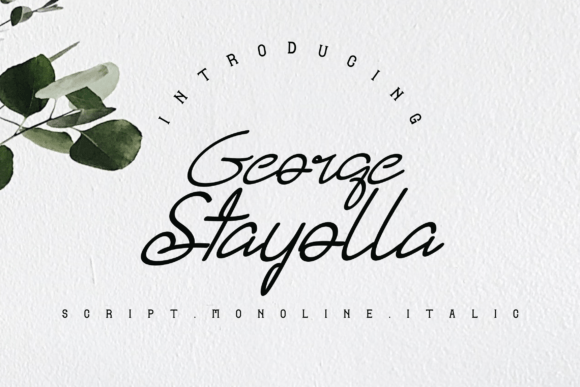
In the crowded landscape of digital design, typography often serves as the silent ambassador of your brand. Among the myriad of options available, George Stayolla Font has emerged as a favorite for creators seeking a blend of modern flair and timeless elegance. This handwritten typeface offers a distinct personality—smooth, flowing, and undeniably classy. However, the gap between owning a beautiful font and using it effectively is wider than many anticipate. Whether you are a freelancer designing a logo or a small business owner crafting social media posts, understanding the nuances of this specific typeface is crucial to achieving professional results.
The Allure of the Handwritten Aesthetic
Before diving into the technicalities, it helps to understand why fonts like George Stayolla resonate so deeply with audiences. We live in an era dominated by sterile, geometric sans-serifs. While those are functional, they often lack warmth. George Stayolla Font bridges this gap. It mimics the natural flow of a human hand, providing an organic touch that feels personal and intimate. This makes it an excellent choice for fashion branding, album covers, and social media advertisements where emotional connection is paramount.
However, this emotional appeal comes with a caveat. Many designers fall in love with the aesthetic without considering the practical application. I have seen countless projects where a beautiful script font was used, yet the final product looked chaotic or illegible. The problem wasn't the font; it was the execution. To truly leverage the potential of this typeface, one must look beyond its beauty and understand its mechanics.
Avoiding the "Wedding Invitation" Trap
One of the most common misconceptions surrounding elegant scripts is that they are solely for formal events, such as weddings or galas. While George Stayolla Font certainly shines in those contexts, limiting it to such use is a missed opportunity. Conversely, a frequent mistake is applying this font to inappropriate contexts where it feels out of place, such as technical manuals or dense corporate reports.
The better approach is to view the font as a tool for accentuation. It works best when it is used to highlight key elements rather than carrying the weight of the entire design. For instance, if you are designing a magazine layout, use George Stayolla for the pull quotes or the cover headline. Do not use it for the body text. The looping swashes and connected letters that make it beautiful also make it exhausting to read in long paragraphs.
Common Typography Errors and How to Fix Them
When working with handwritten fonts, beginners often make critical errors that undermine the professionalism of their work. Recognizing these pitfalls is the first step toward correction.
- Ignoring Letter Spacing (Kerning): Script fonts connect in specific ways. Unlike block letters, you cannot simply adjust the tracking (the overall spacing of a block of text) without breaking the visual connection between letters. If you increase the tracking too much on George Stayolla Font, the letters will look like they are floating apart. Conversely, tightening it too much causes overlapping loops that create visual clutter.
- Overusing Swashes: Many modern script fonts come with "stylistic alternates" or swashes—extra flourishes at the beginning or end of words. A common mistake is adding a swash to every single letter. This creates a tangled mess. The rule of thumb is to use swashes sparingly, usually only at the beginning or end of a word to create a visual anchor.
- Poor Contrast Choices: Because George Stayolla Font has thin, varying stroke widths, it can disappear against busy backgrounds. Placing this font over a high-contrast photograph without a background overlay or shadow is a recipe for illegibility.
Contextual Application: Where Does It Fit Best?
Understanding the environment where the font thrives is essential for efficiency. You would not wear a tuxedo to the gym; similarly, you should not force a high-end script font into every scenario.
Branding and Logo Design
For entrepreneurs and small business owners, George Stayolla Font is a powerful asset for logos, particularly in the fashion, beauty, and hospitality industries. However, a common mistake is failing to check the font's legibility at very small sizes. A logo often appears on a website favicon or a business card. If the signature style becomes an unreadable blob at 10 pixels high, it fails its purpose.
Better Approach: Always test your logo design by shrinking it down to the size of a postage stamp. If you cannot read the brand name clearly, consider simplifying the letterforms or using a different, cleaner font for the tagline while keeping George Stayolla for the main wordmark.
Social Media and Marketing
In the fast-paced world of social media, you have about two seconds to capture attention. George Stayolla Font is excellent for "stop-the-scroll" graphics on Instagram or Pinterest. It adds a human touch to digital noise. However, using it for an entire infographic is a mistake. The eye needs a break.
Better Approach: Use a hierarchy. Use George Stayolla for the headline to inject personality, and pair it with a clean, sans-serif font like Montserrat or Lato for the supporting text. This contrast creates a dynamic and readable layout.
Print Media and Apparel
When using this font for album covers or apparel mockups, vector quality is paramount. A mistake often made by hobbyists is using low-resolution versions of the font or rasterizing the text too early in the design process. If you plan to print a design on a t-shirt, the edges of the letters must remain crisp.
Better Approach: Ensure you are using the OpenType (OTF) or TrueType (TTF) version of the font, not a web font (WOFF), for print projects. This ensures the highest fidelity and allows you to access all stylistic alternates.
Evaluating Quality Before You Commit
Not all handwritten fonts are created equal. Before you decide to buy or download George Stayolla Font, you need to evaluate its technical quality. A beautiful design on a sales page does not guarantee a functional font file.
- Check the Glyph Set: A high-quality font should support multiple languages. Does it include accented characters for European languages? If you are a global brand, this is non-negotiable.
- Inspect the Connections: Look closely at how the letters connect. In poorly made scripts, the connections are awkward or break the baseline rhythm. George Stayolla is known for its smooth, consistent flow, but always download a test version if available.
- Licensing and Usage: This is a critical step many skip. Ensure the license covers your intended use. If you are using it for a client's logo, you generally need a license that permits commercial use and, ideally, logo embedding. Using a "free for personal use" version for a business project can lead to legal headaches later.
Mastering the Technical Setup
Once you have the font, installation is just the beginning. To truly master George Stayolla Font, you need to explore the features hidden within the file. Most modern design software, such as Adobe Illustrator or Photoshop, supports OpenType features.
For example, if you are writing the word "Signature," the capital "S" might look too standard. By accessing the "Glyphs" panel in your design software, you might find a special swash version of the "S" that adds a dramatic tail. Knowing how to access these alternates separates amateur typography from professional typesetting.
Furthermore, pay attention to the baseline. Handwritten fonts often have a slightly bouncing baseline to mimic natural writing. While this is charming, it can look sloppy if not aligned with other elements in your design. You may need to manually adjust the vertical position of the text to ensure it balances visually with your imagery or other text blocks.
Conclusion: Design with Intention
George Stayolla Font is more than just a set of characters; it is a design tool capable of adding significant value to your projects. It offers a sophisticated, modern, and personal touch that few other typefaces can match. However, the elegance of the font demands a thoughtful approach from the designer.
By avoiding common mistakes—such as ignoring legibility, overusing swashes, or neglecting technical licensing—you ensure that your work stands out for the right reasons. Remember that typography is about communication. Use this font to speak clearly, elegantly, and effectively to your audience. When used with intention, George Stayolla can transform a standard design into a memorable brand experience.