Mastering Display Typography: The Cultural Impact of the Far Out Font
In the realm of digital design, typography is rarely just about legibility; it is about personality, emotion, and context. While serif and sans-serif fonts handle the heavy lifting of body text, display typefaces serve a different, more expressive purpose. Among the vast library of creative assets available to modern creators, the Far out Font has emerged as a distinctive tool for those seeking to inject a specific retro-futuristic energy into their work. This article explores the unique characteristics of this typeface, its practical applications across various industries, and the technical considerations required to implement it effectively.
The Anatomy of a Groovy Typeface
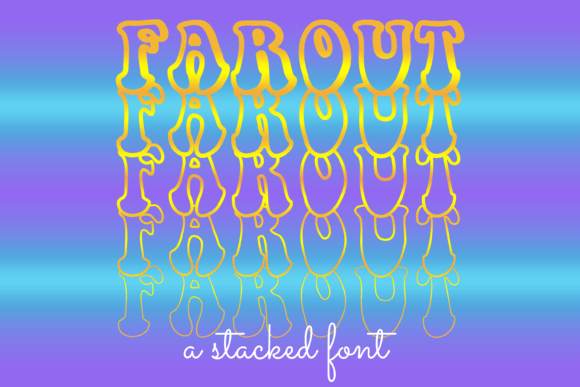
To understand why a font resonates with an audience, one must first analyze its visual structure. The Far out Font is characterized by its fluid, curvilinear geometry. Unlike rigid, grid-based geometric sans-serifs, this typeface embraces the aesthetics of the late 1960s and 1970s counterculture movement. Its defining features include soft, rounded terminals, variable stroke widths that mimic the pressure of a felt-tip marker, and a general sense of kinetic energy.
The visual weight of the Far out Font is typically heavy, making it ideal for headlines where immediate impact is necessary. The letter spacing (tracking) often appears tight by default, allowing the characters to interact with one another, creating a cohesive visual block rather than a row of isolated symbols. This interaction is vital for maintaining readability in stylized typography; when letters flow into one another, they create a rhythm that guides the eye naturally across the page.
Visual Weight and Contrast
When working with display fonts like the Far out Font, contrast is a critical design principle. Because the font carries a high visual density and intricate stylistic details, it demands a clean background to function effectively. Placing this font against a cluttered image or a busy pattern can result in visual noise, rendering the text unreadable. Successful integration requires a balance where the typography acts as the focal point, supported by minimalist surrounding elements.
Diverse Applications in Modern Design
The versatility of a display font is measured by its ability to adapt to different mediums. While the Far out Font has clear roots in vintage aesthetics, its application in contemporary design is surprisingly broad. It bridges the gap between nostalgia and modern minimalism, making it a favorite among various creative professionals.
Digital Marketing and Social Media
In the fast-paced environment of social media, grabbing a user's attention within the first second is paramount. The Far out Font excels in this arena. Its unique silhouette breaks the monotony of standard web-safe fonts often seen on platforms like Instagram and TikTok. Content creators utilize this font for:
- Thumbnail Text: The bold nature of the font ensures that titles remain legible even when scaled down to mobile screen sizes.
- Story Overlays: The playful tone of the typeface matches the ephemeral, casual nature of Instagram or Facebook stories.
- Brand Identity: Lifestyle brands targeting a younger demographic often adopt this font to signal creativity and non-conformity.
Physical Merchandise and DIY Crafts
The resurgence of interest in physical crafting, including Cricut and sublimation printing, has created a demand for fonts that cut cleanly and transfer well onto physical objects. The Far out Font is particularly popular in the DIY community. Its bold strokes make it excellent for:
- Apparel Design: T-shirts and hoodies featuring retro slogans often utilize this typeface to evoke a specific era.
- Stickers and Decals: The distinct shape of the letters makes for visually appealing stickers that stand out on laptops and water bottles.
- Event Invitations: For themed parties or festivals, this font sets the mood immediately upon the guest reading the invitation.
Editorial and Packaging Design
Product packaging is a silent salesman on the shelf. When a consumer scans a shelf of products, they are drawn to packaging that communicates its contents through visual cues. A brand selling organic teas, vinyl records, or artisanal snacks might employ the Far out Font to suggest that their product is crafted with care and individuality. In editorial layouts, such as magazine covers or feature spreads, the font can be used for pull quotes or section headers to break up long-form text and add visual interest.
Strategic Implementation and Best Practices
Adopting a stylistic font like the Far out Font requires more than just installation; it requires a strategy. Because it is a display typeface, it is generally not suitable for long-form body copy. Using it for paragraphs would result in eye strain for the reader due to the complex shapes of the letters. Instead, it should be reserved for high-impact moments.
Pairing with Complementary Fonts
The most effective way to use the Far out Font is to pair it with a neutral, highly legible typeface for the supporting text. A clean sans-serif, such as a standard Helvetica or a modern geometric sans, provides a visual "resting place" for the eye after viewing the expressive display font. This pairing creates a hierarchy that is both functional and aesthetically pleasing.
For example, a website landing page might use the Far out Font for the main H1 hero text, while the sub-headers and body paragraphs utilize a standard sans-serif. This ensures that the page feels professional and readable while still retaining a unique brand voice.
Color Theory and Context
Color plays a significant role in how the Far out Font is perceived. To lean into the retro aesthetic, designers often pair it with earthy tones (mustard yellow, avocado green, burnt orange) or high-contrast neon palettes against dark backgrounds for a "synthwave" vibe. However, using the font in stark black and white can also create a modern, high-fashion look, stripping away the "retro" context and focusing purely on the geometry of the letters.
Technical Considerations for Creators
When integrating the Far out Font into a workflow, several technical factors must be addressed to ensure the final output is professional.
File Formats and Licensing
Fonts come in various formats, such as .OTF (OpenType Font) and .TTF (TrueType Font). For web use, .WOFF or .WOFF2 formats are standard to ensure fast loading times. Creators must also ensure they have the correct license for their intended use. A font licensed for personal use in a DIY craft cannot legally be used on a commercial product for sale. Always verify the licensing terms of the Far out Font before monetizing designs.
Scalability and Resolution
Display fonts are designed to be viewed at large sizes. However, when scaling the Far out Font to very large dimensions for banners or signage, vector formats are essential. Rasterized text (like a JPEG) will pixelate and lose its crisp edges. Ensuring the font is converted to outlines (in software like Adobe Illustrator) before sending to a large-format printer guarantees that the curves remain smooth, regardless of the output size.
The Psychology of Typography
Why does a font like the Far out Font appeal to such a broad audience? The answer lies in psychology. Typography triggers associations. A sharp, angular font might feel urgent or aggressive, while a rounded, flowing font like the Far out Font feels approachable, friendly, and creative. It suggests a break from the rigid structures of corporate life.
For educators and researchers presenting data, using a display font for the title of a presentation can humanize the content. It signals to the audience that while the content may be technical, the delivery will be engaging. For business owners, it suggests innovation and a willingness to think outside the box.
Trends and Future Outlook
Design trends are cyclical. We have seen the return of brutalism and minimalism, and currently, there is a strong resurgence of 70s and 90s aesthetics. The Far out Font fits perfectly into this current wave of "New Retro." It allows designers to tap into a sense of nostalgia without feeling dated. As virtual reality and immersive web experiences grow, expressive typography will likely play a larger role in guiding users through 3D spaces, making fonts with strong personality increasingly valuable.
Ultimately, the Far out Font is more than just a collection of vectors; it is a tool for expression. Whether used on a digital screen or a physical product, it offers a way to communicate warmth, creativity, and individuality. By understanding its structure, pairing it correctly, and applying it to the right context, creators can leverage this typeface to elevate their work from ordinary to exceptional.