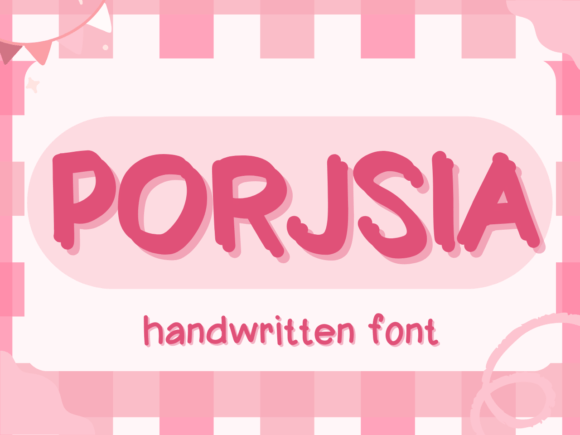
Porjsia Font: A Practical Review for Authentic Handwritten Design
In the vast landscape of digital typography, finding a handwritten font that feels genuinely personal—without crossing into illegibility or cartoonishness—can be a significant challenge. Many designers and creators seek a typeface that conveys warmth, approachability, and a human touch, especially in an era where digital communication often feels sterile. This is where Porjsia Font enters the conversation. It’s a sweet and friendly handwritten font, designed to emulate the natural flow of pen on paper. Its unique style offers a versatile solution for a wide range of creative projects, aiming to bridge the gap between casual expression and professional presentation. This article provides a practical evaluation of Porjsia Font, examining its characteristics, real-world applications, and suitability for various audiences.
Understanding Porjsia's Core Characteristics
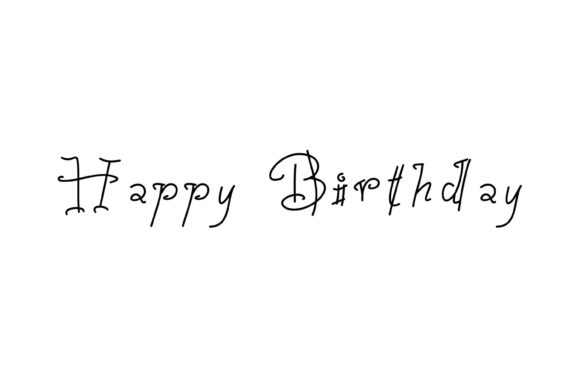
Porjsia Font is characterized by its flowing, connected letterforms that mimic authentic handwriting. The strokes vary naturally in weight, creating a dynamic and organic rhythm across lines of text. This isn't a rigid, monoline script; it has the subtle imperfections and personal flair that make handwriting feel real. The ascenders and descenders are balanced, allowing for comfortable reading at moderate sizes. A key strength lies in its consistency—while individual letters vary slightly, as they do in natural writing, the overall texture remains harmonious. This balance between personality and predictability is crucial for any font intended for practical use beyond single headlines.
The font's purpose is clear: to inject a sense of human connection into design. It’s not built for long-form body text but excels in applications where a personal, crafted touch is desired. Think of it as a tool for adding emotional resonance. Whether it’s used for a product label, a wedding invitation, or a social media graphic, Porjsia aims to make the viewer feel a direct connection to the creator. Its aesthetic is decidedly contemporary, avoiding the overly formal or vintage trappings of some script fonts, which helps it feel fresh and relevant.
Practical Applications and Real-World Performance
When evaluating a font like Porjsia, its performance in real-world scenarios is what truly matters. In digital environments, such as website headers, blog post titles, or email newsletters, Porjsia renders cleanly on standard screens. The letterforms are distinct enough to maintain clarity, even at smaller sizes on mobile devices, though its sweet spot is likely in larger display contexts. For social media graphics, its friendly demeanor can significantly boost engagement, making quotes, announcements, or calls-to-action feel more personal and less corporate.
In print applications, Porjsia’s quality becomes even more apparent. The vector outlines ensure sharp reproduction on everything from business cards to large-format posters. Its natural style translates beautifully to physical products. Imagine it on artisanal food packaging, boutique shop signage, or handmade craft labels. The font effectively communicates authenticity and care. For freelancers and small business owners, using Porjsia across branding materials—from invoices to thank-you notes—can create a cohesive and memorable brand identity that feels approachable and genuine.
Key Strengths and Functional Flexibility
One of Porjsia’s most significant strengths is its flexibility. It pairs well with a variety of sans-serif and serif fonts, allowing designers to create balanced compositions. For instance, using Porjsia for a main heading and a clean sans-serif for body text creates a visually appealing contrast that guides the reader’s eye. This adaptability makes it a valuable asset in a designer’s toolkit, suitable for projects ranging from elegant wedding stationery to energetic marketing flyers.
Its usability is another practical advantage. The font includes a comprehensive character set, supporting multiple languages and including essential punctuation. Features like ligatures and stylistic alternates can often be found in quality script fonts, offering designers subtle ways to customize the text and avoid repetitive letter combinations, thereby enhancing the handwritten illusion. The font’s reliability in maintaining its intended character across different software and output devices is a non-negotiable professional requirement that Porjsia appears to meet.
Ideal Audience and Situational Fit
Porjsia Font is particularly well-suited for professionals and creators who need to communicate a human-centric message. Bloggers and content creators can use it to add a signature feel to their digital platforms, making their content feel more personal. Educators might find it useful for creating engaging worksheets, presentations, or classroom materials that feel welcoming and less intimidating.
For marketers and small business owners, especially those in lifestyle, wellness, food, or artisanal sectors, Porjsia can be a strategic choice. It helps build a brand personality that is friendly, trustworthy, and relatable. Freelancers in graphic design, photography, or writing can leverage it in their portfolios and client communications to showcase a personal touch. It’s also a strong candidate for event planners and publishers working on invitations, greeting cards, or book covers that require an intimate, crafted feel.
Professional Observations and Considerations
While Porjsia offers significant value, a balanced assessment requires acknowledging its limitations. As with any script font, legibility at very small sizes or in dense blocks of text is a concern. It is not designed for running paragraphs in a novel or technical manual. Its strength is in display and short-form text. Overuse across an entire project can also diminish its impact; strategic placement is key.
Another consideration is contextual appropriateness. While perfect for a bakery’s website or a yoga studio’s brochure, it might not convey the right tone for a corporate law firm or a financial institution, where authority and formality are paramount. Understanding your audience’s expectations is critical when integrating a font with such a distinct personality.
From a workflow perspective, ensuring you have the correct licensing for your intended use—whether for a personal blog, a client project, or a commercial product—is essential. The long-term value of Porjsia lies in its ability to remain a relevant tool for creating authentic connections, provided it is used thoughtfully and in alignment with project goals.
Making Porjsia Work for Your Projects
To effectively integrate Porjsia Font into your work, start by defining the emotional tone you wish to set. Use it for elements that benefit from a personal touch: a headline, a pull quote, a logo wordmark, or a product name. Pair it with a simple, neutral typeface for supporting text to ensure overall readability. Test it across your intended mediums—view it on screen and, if possible, in a print proof—to verify its performance.
Consider your project’s lifespan. For a one-time event flyer, a more playful application might be fine. For a brand identity that needs to last for years, ensure the font’s style aligns with your long-term vision. Ultimately, Porjsia Font is a specialized tool. When used with intention and an understanding of its strengths and boundaries, it can significantly enhance the communicative power of a design, making it feel genuinely human. The only limit, as with any creative asset, is your imagination and your strategic application of it.