Astilone Font Duo: Capturing the Authentic Spirit of Hand Lettering
In a digital landscape often dominated by clean vectors and sterile sans-serifs, there is a persistent hunger for the human touch. We crave texture, imperfection, and the warmth that only analog creation can provide. This is precisely where the Astilone Font Duo steps in, not merely as a typeface, but as a comprehensive toolkit for designers seeking to bridge the gap between digital precision and handmade authenticity.
The Anatomy of the Brush Stroke
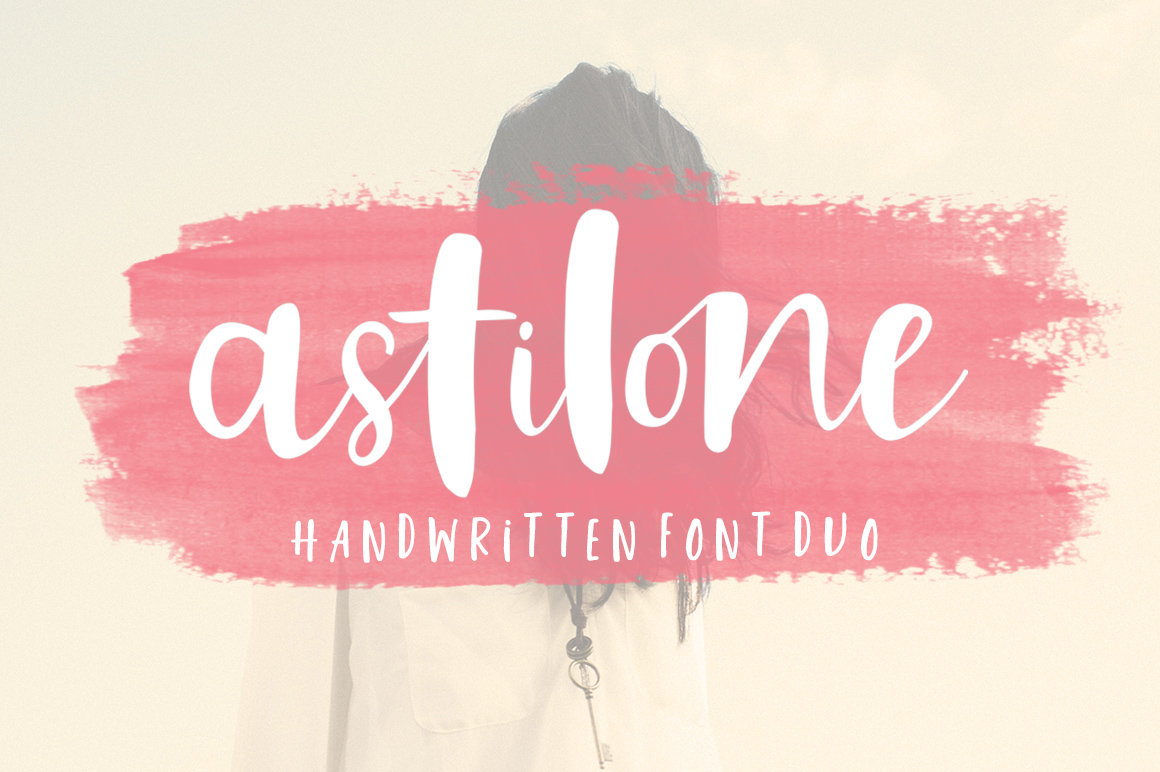
To understand the value of the Astilone Font Duo, one must first appreciate its origin. This is not a font that was drawn on a grid and then "texturized" to look old. It was physically created with a brush and ink. Every curve, every thick downstroke, and every tapered entry point was born from the friction of bristles on paper. This method results in a texture that is incredibly organic. When you use Astilone, you aren't just typing letters; you are stamping down brush strokes.
The defining characteristic of this collection is its bold irregular baseline. In traditional typography, the baseline is the invisible line upon which letters sit. It is rigid and unyielding. Astilone throws that rulebook out the window. The letters bounce, dip, and rise, mimicking the natural movement of a human hand. This irregularity is crucial because it prevents the text from looking "digital." It introduces a kinetic energy to the design, making the viewer feel as if the words were just written seconds ago.
Why a Duo Matters
Many designers make the mistake of thinking a single display font is enough. However, versatility is key in modern design. The Astilone Font Duo solves the problem of pairability. Finding a script font that matches well with a serif or sans-serif can be a nightmare of clashing moods and proportions.
With Astilone, you get two distinct styles designed to work in perfect harmony:
- The Script: This is the showstopper. It is fluid, swashy, and dramatic. It captures the flow of cursive handwriting but maintains a bold weight that ensures high visibility even on busy backgrounds.
- The Sans Serif (or Slab): The companion font usually offers a more structured, upright form that complements the chaos of the script. It provides the necessary stability to ground the design, ensuring that secondary information remains legible while the headline screams for attention.
Because they were created together, the x-heights, weights, and stylistic quirks are calibrated to align. You don't have to guess if the "A" in the headline matches the "A" in the sub-headline; they share the same DNA.
Practical Applications in Modern Design
Where does the Astilone Font Duo fit into a professional workflow? Its applications are vast, particularly in industries that rely on emotional connection and branding.
Branding and Logo Design
For brands that want to appear approachable, artisanal, or energetic, Astilone is a prime candidate. Think of a coffee shop that roasts its own beans, a boutique clothing line, or a surf shop. The irregular baseline suggests movement and friendliness. Using the Astilone Font Duo in a logo creates an immediate visual signature that feels bespoke and hand-crafted, setting the brand apart from corporate giants.
Social Media and Content Creation
On platforms like Instagram or Pinterest, attention spans are short. A bold, brush-stroke font grabs the eye instantly. The texture of Astilone holds up well even when compressed into JPEGs or viewed on small mobile screens. It is excellent for quote graphics, sale announcements, and headers that need to cut through the noise of a busy feed.
Product Packaging
Packaging design often requires a hierarchy of information. You need the product name to pop, but the ingredients and instructions need to be readable. By using the script variation of Astilone for the product name and the companion font for the details, you create a natural hierarchy that guides the consumer's eye effortlessly.
Technical Considerations and Usability
While the aesthetic is loose and free, the technology behind the Astilone Font Duo is precise. One of the most common issues with hand-brushed fonts is spacing. If the letters are spaced too tightly, the brush strokes overlap illegibly. If spaced too loosely, the words fall apart.
Astilone is engineered with careful kerning (the spacing between specific pairs of characters) to ensure that the flow remains readable. It includes features such as:
- Alternates: To avoid repetition, which is the enemy of natural-looking text, the font often includes multiple versions of common letters. This allows you to swap out an "o" or an "e" so that two words next to each other don't look identical.
- Ligatures: These are special characters where two letters join together, just as they would in natural cursive writing. This enhances the realism of the font significantly.
- PUA Encoding: This ensures that the special characters and swashes are accessible across all software, including word processors and design suites that usually struggle with OpenType features.
Choosing the Right Context
While the Astilone Font Duo is powerful, it is not a universal solution. Context is everything. Because of its bold, irregular nature, it is best suited for display purposes—headlines, logos, and short bursts of text.
Using Astilone for long paragraphs of body copy would be a mistake. The irregular baseline, which is charming in a headline, can become tiresome to the eye when reading 500 words. It is designed for impact, not immersion. When selecting this font, consider the "voice" of your project. Does your project need to shout with excitement, or whisper with elegance? Astilone is the former. It is the font you choose when you want your design to feel alive, energetic, and unmistakably human.
The Value of Texture in a Flat World
Design trends come and go, but the appreciation for craftsmanship remains. We are currently seeing a massive resurgence in "lo-fi" aesthetics, risograph textures, and hand-lettering. The Astilone Font Duo taps directly into this zeitgeist.
It offers the efficiency of digital typography—you can change the wording instantly, resize it without loss of quality, and distribute it to clients—while delivering the aesthetic of analog art. For a designer working on a tight deadline, this is the holy grail. You get the "hand-made" look without having to spend hours with a brush pen and a scanner cleaning up ink splatters.
Ultimately, the Astilone Font Duo