The Sacrad Font: A Guide to Using This Delicate Handwritten Typeface Perfectly
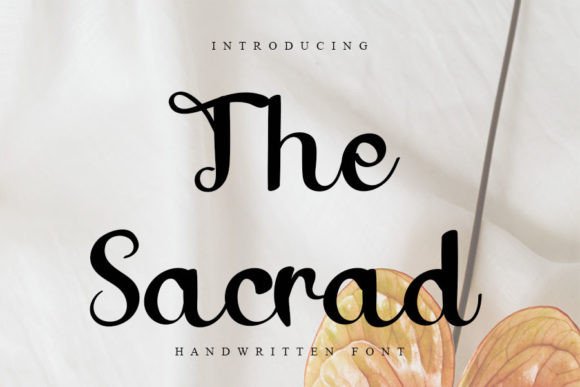
The world of typography is vast, but few styles capture the heart quite like a well-crafted handwritten font. Among these, The Sacrad Font stands out as a particularly elegant choice. Described as slim, delicate, and joyful, it is designed to infuse designs with a romantic and personalized touch. It’s the kind of typeface that makes a wedding invitation feel more intimate or a greeting card feel genuinely heartfelt. However, the very qualities that make it beautiful—its slenderness and intricate letterforms—also demand a thoughtful approach.
Many designers and creators, from seasoned professionals to enthusiastic hobbyists, fall into common traps when working with fonts like The Sacrad. The result is often a design that feels cluttered, illegible, or fails to convey the intended elegance. Understanding the font's nature is the first step to harnessing its full potential. Let's explore how to avoid these pitfalls and make The Sacrad Font a stunning asset in your creative toolkit.
Understanding The Sacrad's Delicate Nature
At its core, The Sacrad is a slim and delicate handwritten font. This isn't just a stylistic detail; it's a fundamental characteristic that influences every design decision. Its thin strokes and flowing connections are what give it that joyful, romantic air. This makes it a superb choice for projects where a personal, human touch is paramount. Think of wedding invitations, save-the-date cards, boutique branding, or elegant social media graphics. The font excels where it can breathe and where its details can be appreciated at a comfortable viewing size.
The mistake many make is treating it like a workhorse sans-serif. They attempt to use it for long paragraphs of body text or at very small sizes for footnotes. This is where the "delicate" aspect becomes a liability. Thin strokes can become difficult to read when compressed into a small space or when printed on low-quality paper where ink can bleed. The goal is to let The Sacrad shine, not to force it into a role it wasn't designed for.
Critical Mistakes to Avoid with Handwritten Fonts
Choosing a beautiful font is only half the battle. Applying it incorrectly can undermine your entire design. Here are some frequent missteps and how to correct them.
Overlooking Legibility at Scale
A common error is prioritizing aesthetic appeal over clear communication. The Sacrad's flowing script can create beautiful headlines, but if the letter spacing is too tight or the size is too small, words can become a visual jumble. For instance, the loops in 'l's and 'h's might merge with adjacent letters, turning "hello" into an unreadable blob.
The Fix: Always test your text at its intended viewing size and distance. For a wedding invitation held in the hand, print a test copy. For a website banner, view it on multiple devices. Generously adjust tracking (the overall spacing between characters) and kerning (the space between specific pairs of letters) to ensure each character is distinct. Remember, with a font this elegant, clarity is part of the elegance.
Ignoring Context and Pairing
Using The Sacrad for every element on a page creates visual monotony and weakens its impact. Similarly, pairing it with another ornate or overly playful font can result in a chaotic, unprofessional look. The romantic touch of The Sacrad is best highlighted through contrast.
The Fix: Employ a strategic font pairing. Use The Sacrad for your primary headline or a key call-to-action phrase. Pair it with a clean, highly legible sans-serif or a simple serif font for body text and supporting information. This creates a clear hierarchy. For example, a wedding invitation might use The Sacrad for the couple's names and a classic serif like Garamond for the event details. This approach lets the handwritten font deliver its emotional punch without sacrificing overall readability.
Disregarding Medium and Technical Constraints
A design that looks perfect on a high-resolution screen may fail when printed. The thin strokes of The Sacrad can be fragile. On textured paper, they might break up. In a small email graphic compressed for fast loading, they might pixelate. Choosing a font without considering its final application is a recipe for frustration and wasted resources.
The Fix: Before finalizing, ask: Where will this be seen? For digital use, ensure your file formats (like PNG or SVG) are optimized to preserve line quality. For print, always request a proof. Discuss paper stock with your printer—smooth, high-quality paper will render the delicate lines far better than absorbent, fibrous stock. This foresight ensures your beautiful design translates perfectly from concept to reality.
Practical Steps for Evaluating and Using The Sacrad
Moving from theory to practice involves a few key checks. Whether you're downloading, buying, or applying the font, a methodical approach saves time and ensures quality.
- Test Before You Commit: Most reputable font foundries offer a "test drive" or sample text feature. Use it. Type out your actual project text—not just "The quick brown fox." Check how specific letter combinations in your name or headline look. Does the 'r' connect smoothly to the 'a'? Is the 't' crossbar too delicate for your needs?
- Check the Character Set: Does The Sacrad include the full range of punctuation, numerals, and accented characters you need? A beautiful font is useless if it lacks an exclamation point for your call-to-action or the correct symbols for a price list.
- Understand the License: This is a crucial, often overlooked step. The license dictates how you can use the font. Can you use it for client work? Can you embed it in a mobile app or a PDF for sale? Using a font outside its license terms can lead to legal issues. Always read the End User License Agreement (EULA) carefully.
- Master the Context: Reserve The Sacrad for moments of emphasis. Use it for a hero section headline, a logo wordmark, a pull quote, or the most important line on a greeting card. Let its romantic personality serve as a design accent, not the entire composition.
By respecting the inherent qualities of The Sacrad Font—its delicacy, its joy, its romantic spirit—you move beyond simply placing text on a page. You begin to craft an experience. You avoid the pitfalls of illegibility and visual clutter, and instead create designs that feel both personally meaningful and professionally polished. It's a tool that, when used with insight, can genuinely elevate your work, turning ordinary projects into something cherished. The key is to approach it not just as a set of letters, but as a nuanced element of your design language.